I was going to write this blog about death (yes, death) but I have decided to write about love, not instead of, but as a tribute to, death, birth, life and all its interwoven moments and rhythms that comprise human existence, underpinned with love, loss, change, and surrender.
As I write this, my old cat Laxmi lies dying on my couch, while next to me is my dog Honey, 4years old and filled with the enthusiasm of youth and Labrador-ness. Laxmi is a sleek black cat with a small white spot on his neck, it’s so small that sometimes I think I imagine it, but it there it is, his signature marking. I love Laxmi so much, my heart aches, his soft breathing body slowed into stillness, cracking my heart, tears seeping out the corners of my eyes, rivers of uncontrollable loss.
This process of love and loss, of endings and change, this dynamic movement that is the circle of life. Laxmi has been my constant companion for 20 years, it is a lifetime, literally. His presence precedes the births of my children, the pack of pooches we have loved and lost, the houses and friends that filled them, the immigration of my siblings, the aging of my parents, the wrinkles on my face, the decades of marriage, swims in wild oceans in untamed places, sunlight on my skin and cold mornings, more moments than I can consciously recall. All these experiences are moments of joy, love, life, and loss, of change.

Soon after our children were born, we filled our house with dogs. Three of them. I loved them too, and all have since left this life. And now my cat lies dying on our couch, life slipping organically from him, almost peacefully, his breath the last movement to connect him to this realm. Breath. And while I am sad beyond words, I also feel so immensely privileged to have loved him, to have moved through this life with him nearby, to have cared for him, to have experienced him, and now to watch him leave. His death is both so beautiful and sad and the price of love is loss.

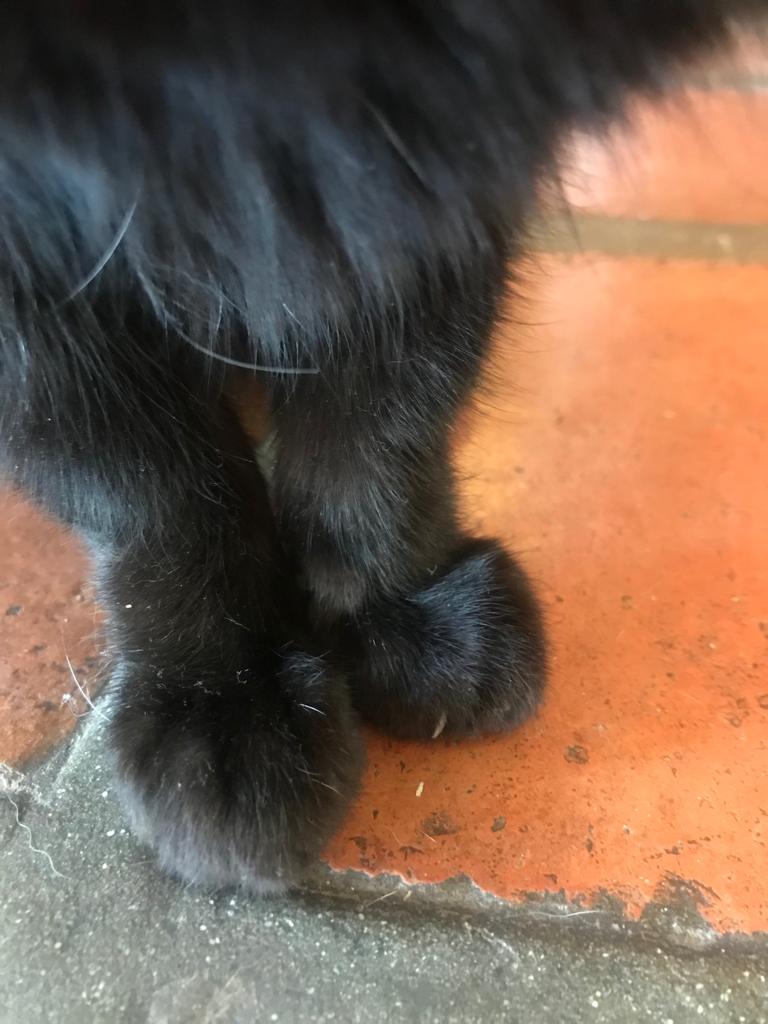
This love, an attachment, this love deep with meaning and memories and identity that binds us to people, creatures, and moments. To surrender to love is to surrender to loss. Love has many forms and hierarchies, some love is so voluminous, its fills us to capacity and spills out of us, some love simply brushes our edges. But oh, to love and be loved. Part of me knows, that this experience of his easing from life and my letting him go, is preparation for other losses. I watch the slow breathing of Laxmi’s body, still attached to this life, breath his last interaction with this world and his last breath will be his goodbye.
The breath itself, in all its poetry is a metabolic process of taking in, absorbing, and letting go in one of life’s most fundamental actions. Our bodies through every breath, every thought, every moment, every meal, takes in, absorbs, transforms, and releases what is not needed.
Love and surrender are interwoven concepts psychology, Yoga, and Buddhism, and are integral to the human condition. Life is resplendent with its joy and its pain, conflict and peace, love, and loss. Love offers us a view into a vastness, of a world beyond our small selves, a connection to another, to others, a portal to something infinite that forever transforms us.
Like all human emotion, love is complex and varied but to truly love we need to learn the art of surrender, not so that we can fall into another’s arms, powerless, but so that we can be awake and be present to this life, that we may be powerfully alive to love, and I do not mean the Disney version of in love, but the love you feel for your friend, your child, your pet, an arbitrary stranger with a tender smile, and hopefully yourself. The love that is all around us and within us.
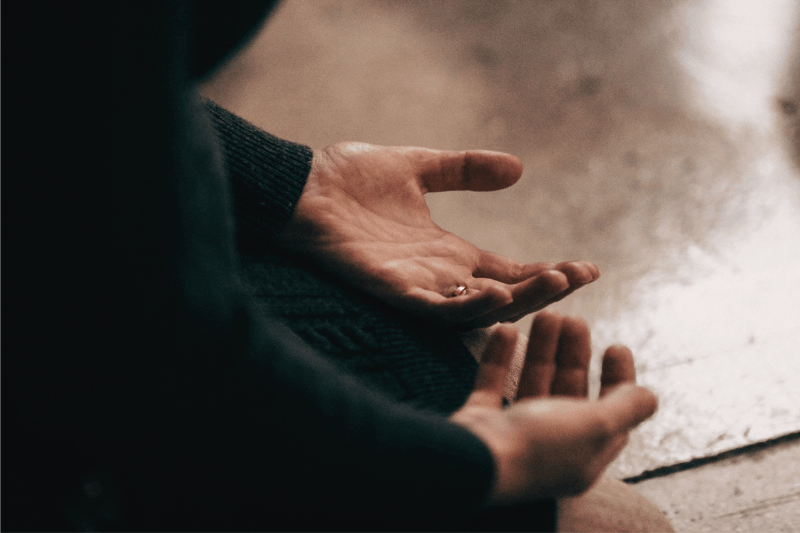
Surrendering is hard, it is not passive and as you undertake the journey, you might largely notice how difficult it is to let go, how much of your identity is entwined with the gripping, and a stock taking of all the places and spaces in your heart that hold tightly, all the ways in which you are not surrendered.
It takes courage, strength, and compassion to meet yourself in both darkness and light, and there is nothing weak about valuing another’s happiness, freedom, and wellbeing, to walk alongside them through darkness and light. There is nothing weak about holding space for another’s heart and bearing witness to their journey, but it does take vulnerability, to be tender with another, to be tender with yourself. Ram Das says we dance with love, one partner opening then retreating, never fully able to surrender, because within the surrender lies a lack of identity, a space where we lose ourselves to the fullness of the truth of love, a space where separation ceases to exist.
The idea of surrender is present in all spiritual traditions with unconditional love being the guiding principle. This inner surrender is an allowing of what is here, now, and is intrinsic to being a good friend, parent, partner, human being. In our western world we are not taught how to love, we are taught to idealize love, navigated not with surrender, but with an agenda, a goal driven love of desire. We are not taught how to be with suffering, neither that of others, nor our own; we are taught to shun and avoid pain (it interferes with our productivity!), and increasingly we lack the tools for presence (thank you tiktok!). This suffering, inherent to life, holds a gift of vulnerability, befriending our own painful thoughts, allowing them to wash over and through, sometimes it takes moments, sometimes days, sometimes years.
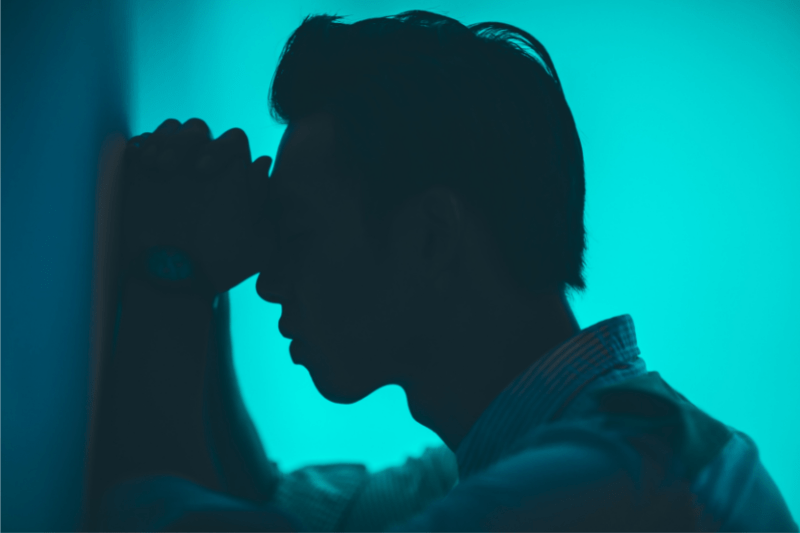
Yoga and Buddhism have a word for suffering – Dukkha, which roughly translates to bad axle hole, in reference to days when travel was not a high-speed vehicle but a wagon. This bad axle hole would create a bumpy journey. So Dukkha is seen as a part of the journey, and a result of the nature of flux, but the extent of our suffering comes from our inner clinging and wanting the world to be different. It emerges from our own resistance to what is, a rejection of current reality. To quote an adage “obstacles are not in the road, they are part of the road”. Everyone suffers at some point; it is an unavoidable and necessary part of the human condition.
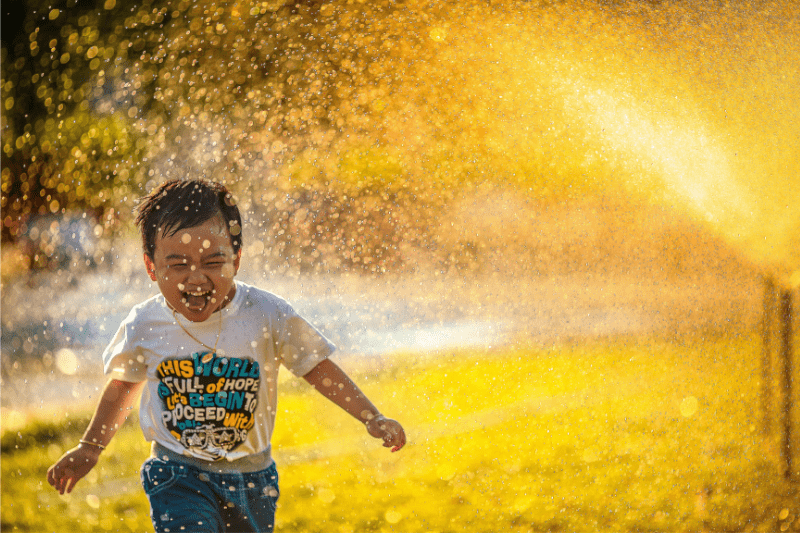
Yang to the yin of dukkha, is sukha which means good axle socket, can also be translated as sweetness or joy and accounts for the times when the journey is like a smooth ride in a hovercraft. This sweetness too is key to human existence. And while we are on high alert for pain (wired for survival) and will try to avoid it, a preference for seeking joy, we also know that stringing together moments of pleasure does not equate to mental happiness, in fact pleasure can be as empty and painful as suffering, nor does challenge or pain create a life of misery. We are multifaceted beings in a world where nothing is absolute, and so it is feasible that we can experience dukkha and sukha simultaneously, as a concurrent truth. Both pain and beauty are an essential part of being human.
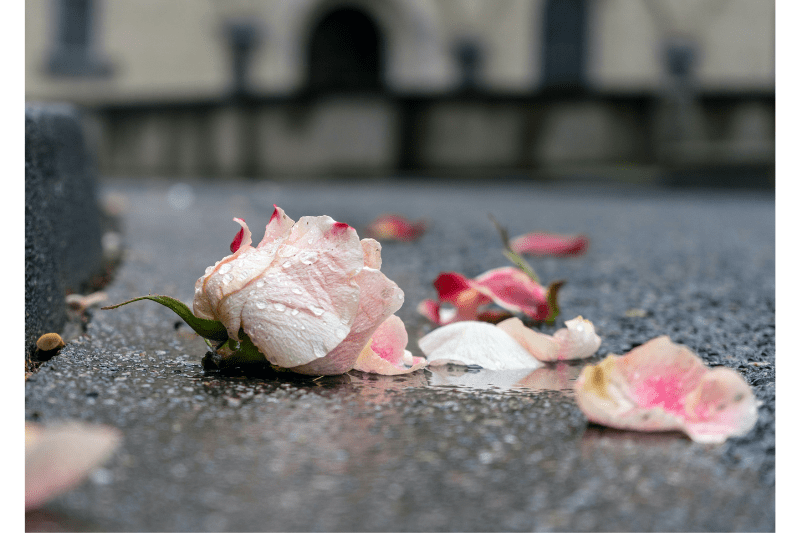
The natural order of things is that of constant evolution. To be alive evokes change, always in the process of becoming and yet paradoxically, change is what we often fear, it denotes a loss of control or at least the illusion of control. And as we are wired for safety, we particularly resist change that hints at potential suffering. To be open to an ever-changing world, to surrender to it, is to soften into love, is an act of faith. To be open hearted to what lies before us, even the murkier parts of ourselves and others, surrendering to both dukka and sukha, to whatever the journey holds.
When we stand open hearted, receptive to a moment, a person, fully awake and attuned, we move into space of both vulnerability and bravery, a place of courage. This is love. Retracting and retreating with the pain of loss or potential loss, is a return to our own small, tight universe, but to love freely without expectation, to love without the need to control and have faith in the organic process of love itself melts the fear and reconnects us the infinite, forever transformed.
Thich Naht Hahn said that real love is rooted in four elements of compassion, kindness, joy and equanimity.
Laxmi died the following day. I loved him so. He is buried under the tree, and I see his presence everywhere, but peacefully. Dukkha and Sukha. The price of love is loss and loss is not always a physical death, but the ending of a moment, a season, an epoch, a breath. To surrender is to have faith and trust, the companions of love, an expansive love in which we bear witness to the greatness of life.